
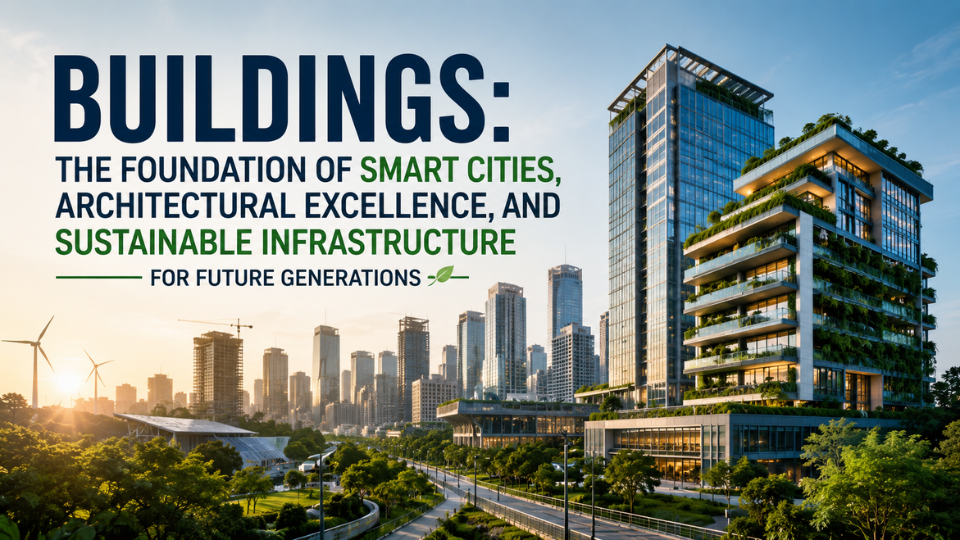
Buildings are much more than structures made of concrete, steel, glass, and bricks. They are living symbols of civilization, progress, creativity, and human ambition. Every city tells its own story through its buildings. From towering skyscrapers touching the clouds to beautifully designed residential homes that provide warmth and comfort, buildings define how people live, work, learn, and connect with one another. Throughout history, architecture has reflected the culture, technology, economy, and aspirations of societies. Today, buildings are evolving faster than ever, driven by technological innovation, sustainable construction practices, and smart urban planning.
Modern architecture is no longer focused solely on creating attractive structures. It now emphasizes energy efficiency, environmental responsibility, intelligent automation, occupant comfort, and long-term durability. As cities continue to expand and populations increase, buildings play an essential role in creating healthier, smarter, and more sustainable communities. Every new project represents an opportunity to improve quality of life while minimizing environmental impact.
The transformation of urban landscapes across the world demonstrates how architecture and engineering continue to evolve. Cities are becoming home to iconic commercial towers, mixed-use developments, luxury residences, educational campuses, healthcare facilities, industrial complexes, and green public spaces. Each building contributes to the identity of its surroundings while supporting economic growth and social development. Whether designed for business, education, healthcare, entertainment, or housing, every building serves a purpose that extends far beyond its physical appearance.
The history of building construction reflects humanity's remarkable journey from simple shelters to technologically advanced skyscrapers. Early civilizations relied on natural materials such as mud, stone, timber, and clay to create homes and public structures. Ancient monuments still standing today demonstrate exceptional craftsmanship and engineering knowledge that continues to inspire architects worldwide. Over centuries, advances in construction techniques, structural engineering, and material science enabled increasingly ambitious architectural achievements.
The Industrial Revolution marked a significant turning point in construction. The introduction of steel framing, reinforced concrete, elevators, and modern machinery allowed architects to design taller, stronger, and more efficient buildings. Cities experienced rapid urbanization, creating demand for residential apartments, commercial offices, factories, transportation hubs, and public infrastructure. These developments laid the foundation for the modern skylines that characterize major metropolitan areas today.
Contemporary buildings represent a perfect combination of functionality, aesthetics, technology, and sustainability. Architectural design now considers every aspect of human experience, including natural lighting, ventilation, acoustics, accessibility, safety, and energy consumption. Buildings are designed not only to meet present-day needs but also to remain adaptable for future generations.
Commercial buildings have become symbols of economic growth and innovation. Modern office towers provide flexible workspaces equipped with intelligent lighting systems, automated climate control, high-speed connectivity, collaborative environments, and advanced security technologies. Companies increasingly seek office spaces that enhance employee productivity, promote wellness, and reduce operational costs through sustainable design.
Residential buildings have also undergone significant transformation. Modern homes prioritize comfort, energy efficiency, smart home technology, and environmental sustainability. Homeowners now value spacious interiors, natural ventilation, efficient insulation, renewable energy integration, rainwater harvesting, and environmentally friendly construction materials. Apartments and housing communities increasingly include green spaces, recreational facilities, fitness centers, and shared amenities that encourage healthier lifestyles.
Educational institutions rely on thoughtfully designed buildings to create inspiring learning environments. Schools, colleges, universities, and research centers incorporate flexible classrooms, collaborative spaces, digital infrastructure, and environmentally conscious architecture that supports student success. Well-designed educational buildings enhance concentration, creativity, communication, and academic achievement while ensuring safety and accessibility for all learners.
Healthcare facilities demonstrate how architecture directly impacts human well-being. Hospitals, clinics, rehabilitation centers, and medical research institutions require highly specialized building designs that prioritize patient comfort, infection control, operational efficiency, and advanced medical technologies. Natural lighting, calming interiors, efficient layouts, and sustainable building systems contribute significantly to better healthcare experiences.
Industrial buildings remain essential drivers of manufacturing, logistics, and economic development. Warehouses, factories, distribution centers, and production facilities increasingly incorporate automation, robotics, energy-efficient systems, and digital monitoring technologies. Smart industrial buildings optimize operations while reducing environmental impact through efficient resource management and sustainable construction practices.
Sustainability has become one of the defining principles of modern architecture. Climate change, environmental conservation, and resource scarcity have encouraged architects, engineers, and developers to rethink traditional construction methods. Green buildings are designed to minimize energy consumption, reduce carbon emissions, conserve water, and improve indoor environmental quality. Sustainable construction benefits not only the environment but also building owners through lower operating costs and improved long-term value.
Energy-efficient buildings utilize advanced insulation, high-performance windows, efficient HVAC systems, LED lighting, and renewable energy technologies such as solar panels and wind energy. Smart sensors continuously monitor energy usage, automatically adjusting lighting, heating, cooling, and ventilation based on occupancy and environmental conditions. These technologies significantly reduce electricity consumption while enhancing occupant comfort.
Water conservation plays an equally important role in sustainable building design. Rainwater harvesting systems, greywater recycling, water-efficient fixtures, drought-resistant landscaping, and intelligent irrigation systems help reduce freshwater consumption. Responsible water management contributes to environmental protection while lowering utility expenses for building owners.
Building materials have also evolved considerably. Sustainable construction increasingly incorporates recycled steel, engineered timber, low-carbon concrete, bamboo, recycled glass, environmentally friendly insulation, and locally sourced materials. These alternatives reduce the environmental footprint of construction while maintaining structural strength and aesthetic appeal.
Green roofs and vertical gardens have become defining features of modern urban architecture. These living landscapes improve insulation, reduce urban heat islands, enhance biodiversity, improve air quality, and create visually appealing environments. Rooftop gardens also provide recreational spaces that contribute to occupant wellness and community engagement.
Smart buildings represent the next generation of architectural innovation. Digital technologies have transformed buildings into intelligent ecosystems capable of monitoring, analyzing, and optimizing their own performance. Internet of Things devices, artificial intelligence, cloud computing, and advanced automation systems enable buildings to respond dynamically to changing conditions.
Smart lighting systems automatically adjust brightness based on natural daylight availability and occupancy patterns. Intelligent climate control systems maintain comfortable indoor temperatures while minimizing energy waste. Advanced security systems integrate biometric access control, surveillance cameras, facial recognition, and real-time monitoring to ensure occupant safety.
Building management systems provide centralized control over lighting, elevators, HVAC equipment, fire safety systems, water management, and electrical infrastructure. Facility managers can monitor performance remotely, identify maintenance requirements before failures occur, and optimize building operations through predictive analytics.
Artificial intelligence is revolutionizing building maintenance and operations. Machine learning algorithms analyze equipment performance, detect abnormalities, predict maintenance requirements, and improve operational efficiency. Predictive maintenance minimizes downtime, reduces repair costs, and extends the lifespan of critical building systems.
The integration of renewable energy technologies continues to reshape building design. Solar photovoltaic systems generate clean electricity directly from sunlight, reducing dependence on conventional power grids. Battery storage solutions improve energy reliability while supporting grid stability. Buildings increasingly function as energy producers rather than merely energy consumers.
Urbanization continues to create unprecedented demand for innovative building solutions. Rapid population growth requires efficient land use, mixed-use developments, affordable housing, resilient infrastructure, and sustainable transportation integration. Architects and urban planners collaborate to create communities that balance economic development with environmental responsibility.
Mixed-use developments have become increasingly popular because they combine residential, commercial, retail, entertainment, and recreational facilities within a single project. These integrated communities reduce commuting distances, encourage walking, improve convenience, and foster vibrant social interactions.
Accessibility has become a fundamental consideration in modern building design. Inclusive architecture ensures that people of all ages and physical abilities can safely and comfortably access buildings. Features such as ramps, elevators, tactile pathways, accessible restrooms, wide corridors, and barrier-free entrances create welcoming environments for everyone.
Safety remains one of the highest priorities in building construction. Structural engineering advancements improve resistance against earthquakes, hurricanes, floods, fires, and other natural disasters. Modern fire detection systems, emergency evacuation plans, sprinkler systems, smoke control technologies, and structural reinforcement enhance occupant protection during emergencies.
Building Information Modeling has transformed the design and construction industry. Digital three-dimensional models enable architects, engineers, contractors, and clients to collaborate more effectively throughout every stage of a project. BIM improves design accuracy, reduces construction errors, enhances cost estimation, and supports efficient facility management throughout the building lifecycle.
Prefabrication and modular construction methods are revolutionizing project delivery. Components manufactured in controlled factory environments improve quality, reduce waste, shorten construction schedules, and lower overall costs. Modular construction also minimizes disruption at construction sites while enhancing worker safety.
The future of architecture is increasingly influenced by digital innovation. Artificial intelligence assists architects in optimizing building layouts, maximizing energy efficiency, and exploring creative design possibilities. Virtual reality and augmented reality technologies allow clients to experience buildings before construction begins, improving communication and decision-making throughout the design process.
Three-dimensional printing represents another groundbreaking advancement in construction technology. Large-scale printers can create structural components using specialized concrete mixtures, reducing labor requirements, material waste, and construction time. Continued research suggests that 3D printing may significantly influence affordable housing and disaster relief projects.
Climate resilience is becoming an essential aspect of modern building design. Rising temperatures, changing weather patterns, flooding, and extreme storms require buildings capable of adapting to increasingly unpredictable environmental conditions. Resilient buildings incorporate flood-resistant foundations, impact-resistant materials, passive cooling strategies, renewable energy systems, and emergency backup infrastructure.
Healthy buildings focus on improving occupant wellness through superior indoor environmental quality. Enhanced ventilation, natural daylight, low-emission materials, acoustic comfort, thermal regulation, and indoor greenery contribute to healthier living and working environments. Research consistently demonstrates that healthier buildings improve productivity, reduce stress, and enhance overall well-being.
Architecture also plays an important cultural role by preserving heritage while embracing innovation. Historic buildings represent valuable connections to the past, reflecting artistic traditions, engineering achievements, and cultural identity. Restoration projects ensure these landmarks continue inspiring future generations while adapting to contemporary requirements.
Modern skyscrapers symbolize human ambition and engineering excellence. Advanced structural systems, aerodynamic designs, high-strength materials, and sophisticated construction techniques enable buildings to reach extraordinary heights while maintaining safety and efficiency. These iconic structures redefine city skylines and become landmarks recognized worldwide.
Smart cities increasingly depend on intelligent buildings connected through digital infrastructure. Buildings communicate with transportation systems, energy grids, water networks, and emergency services to improve urban efficiency. This interconnected approach enhances resource management, reduces congestion, supports sustainability, and creates better living experiences for residents.
The construction industry continues embracing digital transformation through robotics, drones, autonomous equipment, digital twins, blockchain, and cloud-based collaboration platforms. These technologies improve project management, enhance safety, reduce costs, and increase construction quality.
Economic development is closely linked to the growth of modern buildings. Commercial complexes attract businesses, residential developments accommodate expanding populations, educational campuses produce skilled professionals, healthcare facilities improve public health, and industrial parks generate employment opportunities. Every well-designed building contributes to broader economic prosperity.
Environmental responsibility will remain central to future construction. Governments, developers, architects, and communities increasingly recognize the importance of reducing carbon emissions, conserving natural resources, and protecting ecosystems. Net-zero energy buildings, carbon-neutral construction, circular economy principles, and renewable energy integration represent the future of sustainable development.
Innovation continues pushing architectural boundaries beyond traditional limitations. Adaptive facades respond to changing weather conditions, kinetic structures adjust their shape dynamically, transparent solar panels generate electricity while allowing natural light, and intelligent materials repair themselves after minor damage. These emerging technologies promise a new era of highly responsive and environmentally responsible buildings.
The relationship between people and buildings continues evolving as society changes. Remote work, digital education, healthcare innovation, aging populations, and changing lifestyle preferences require increasingly flexible building designs capable of adapting to diverse needs. Successful buildings of the future will prioritize human experience alongside technological advancement and environmental stewardship.
Conclusion
Buildings are far more than physical structures—they are the foundation of modern civilization, economic progress, cultural identity, and sustainable development. As technology advances and environmental awareness grows, the future of architecture lies in creating intelligent, energy-efficient, resilient, and people-centered spaces. From smart homes and commercial skyscrapers to educational institutions and healthcare facilities, every building contributes to shaping stronger communities and smarter cities. By combining innovative engineering, sustainable practices, advanced technology, and timeless architectural excellence, modern buildings will continue transforming skylines while improving the quality of life for generations to come.